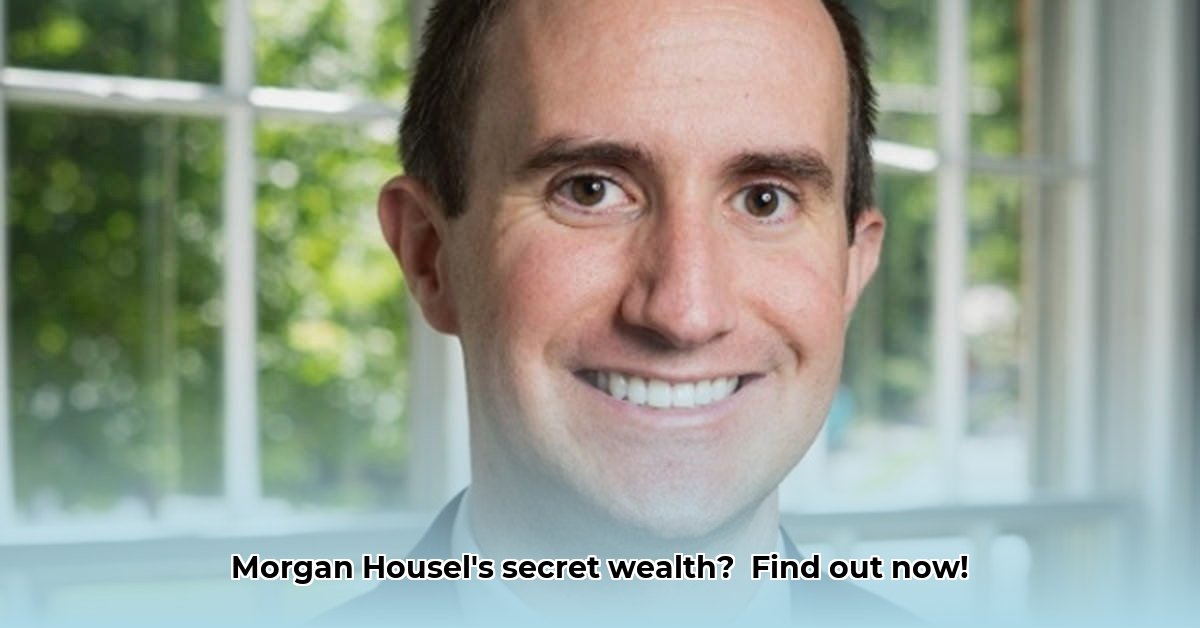
Morgan Housel's Investing Philosophy: A Path to Steady Wealth
Morgan Housel, a highly influential figure in the world of personal finance writing, has garnered a massive following not by boasting about his net worth, but by sharing his remarkably straightforward investment strategy. This isn't about get-rich-quick schemes; it's a patient, risk-averse approach focused on long-term stability and wealth accumulation. While the exact figure of his net worth remains undisclosed (and frankly, less important than the principles it embodies), his methods offer valuable lessons for anyone aiming to build lasting financial security.
Housel's Core Investment Principles: Simplicity and Stability
Housel's strategy revolves around a few key pillars:
Dollar-cost averaging: Instead of trying to time the market (a nearly impossible task), Housel advocates for consistently investing a fixed amount at regular intervals. This strategy smooths out market volatility, preventing emotional reactions driven by short-term fluctuations.
Index funds: He favors low-cost index funds, mirroring the performance of broad market indexes, rather than attempting to pick individual winning stocks. This approach significantly reduces the risk associated with individual stock selection.
Significant cash reserves: Unlike many investors who aim for maximum growth, Housel maintains a substantial percentage of his portfolio (estimates suggest around 25%) in cash. This acts as a crucial buffer during market downturns, allowing him to purchase more assets at lower prices. This defensive strategy prioritizes capital preservation.
Performance and the Importance of Long-Term Perspective
Determining the precise return on Housel's investments is difficult, as detailed public information is limited. However, reports indicate a substantial portion of his portfolio is invested in Markel Corporation, a well-regarded insurance company. While Markel's stock has likely grown steadily over time, it's crucial to remember that past performance is not indicative of future results. Housel's approach emphasizes long-term gains over short-term market fluctuations. Isn't consistent growth over decades more valuable than chasing short-lived gains?
Risk Management: A Contrarian Approach
Housel’s strategy stands in contrast to the prevalent “growth-at-all-costs” mentality seen in many investment circles. By maintaining a large cash position, he accepts a degree of opportunity cost (the potential profit forgone by not investing that cash). However, he prioritizes capital preservation and the emotional security of having financial flexibility during market downturns. While his significant investment in Markel carries inherent concentration risk, his deep insider knowledge likely mitigates this somewhat.
Practical Lessons for Everyday Investors
Housel's approach provides a roadmap for building a strong financial foundation:
Define your financial goals: Clarity on your objectives—retirement, a down payment, or other aspirations—determines your investment timeline and risk tolerance.
Assess your risk tolerance: Your comfort level with market volatility dictates the balance of stocks and bonds in your portfolio and dictates your cash reserves.
Diversify investments: Avoid concentrating your investments in single companies or sectors. Spread your risk using diversified index funds.
Embrace dollar-cost averaging: Regular contributions create a consistent investment approach that mitigates the emotional rollercoaster of market timing.
Maintain an emergency fund: Cash reserves offer a buffer against unexpected events, reducing the likelihood of making panic driven decisions during challenging market conditions.
Conclusion: The Power of Patience and Prudence
The true value of Morgan Housel's investment strategy lies not in identifying a specific net worth, but in the underlying philosophy of long-term thinking, risk management, and emotional discipline. By prioritizing stability and avoiding impulsive actions fueled by market noise, Housel provides a model for building substantial wealth over time. The lesson? Steady growth, consistent habits, and a prudent approach to risk are more powerful than chasing short-term windfalls.